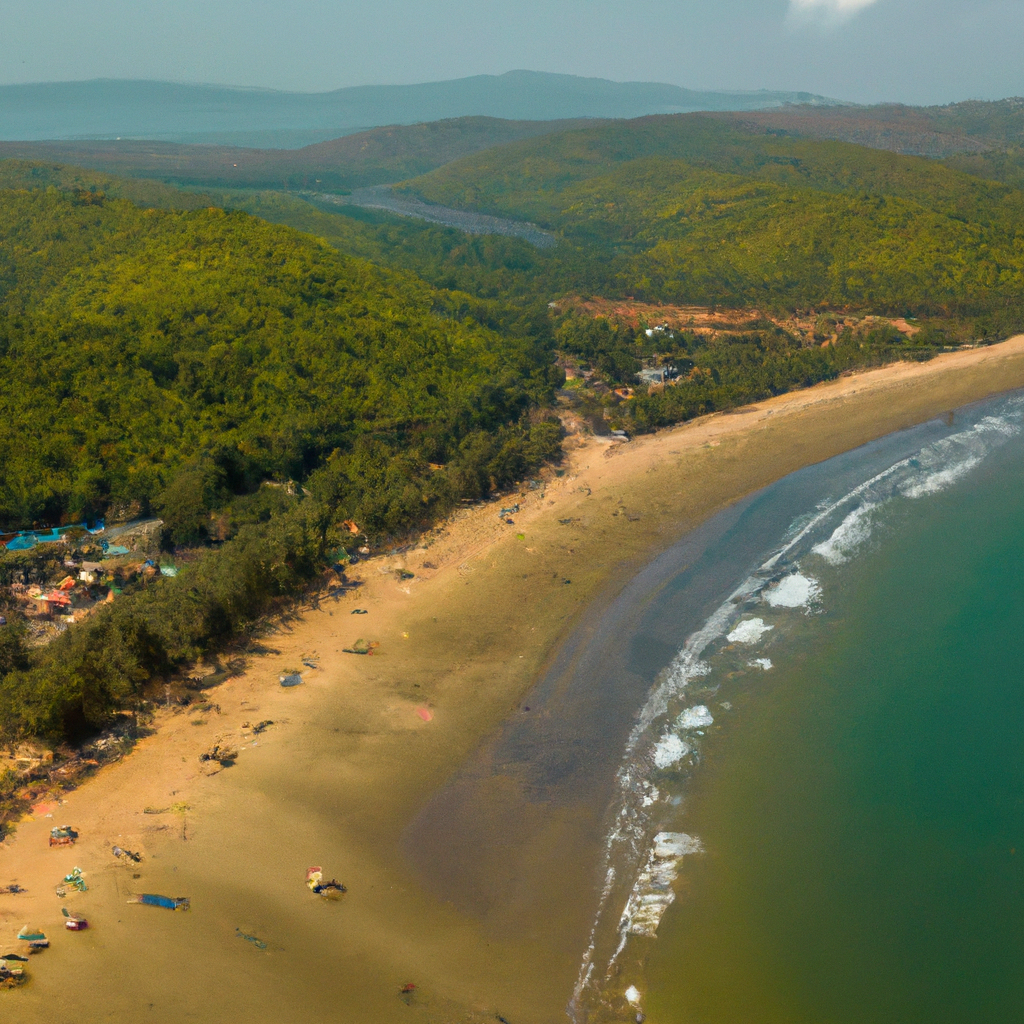
Rents are up, startups are setting up all over the state, but locals can’t get jobs easily.

Goa’s Maker’s Asylum is housed in a 100-year-old Portuguese mansion. Maker’s Asylum
28 August 2023

- The state of Goa, among India’s biggest tourist destinations, has seen an influx of tech workers and digital nomads in recent years. The new residents are from bigger Indian cities like Mumbai and Bengaluru, as well as other countries, turning Goa into an IT hub.
- Though the development has been good for business, local Goans complain that prices have risen steeply.
In 2020, lockdowns forced Indian startup Maker’s Asylum to make a tough choice: stay in expensive Mumbai and downsize, or move. The company, a community makerspace, relocated to Goa, the coastal state known for its idyllic beaches, laid-back lifestyle, and Portuguese colonial heritage.
Maker’s Asylum is now housed in a 100-year-old Portuguese mansion, on a leafy road in the village Moira, and it has flourished. The rent and electricity fees are a fraction of what the company paid in Mumbai, and it’s more popular among clients than it ever was in the big city. Every day, the mansion is filled with tech workers, entrepreneurs, and enthusiasts, building things together and attending workshops organized by the company. But Maker’s Asylum isn’t the only new arrival in Goa. The global remote working trend has brought a wave of Indian tech workers, foreign digital nomads, and other professionals to the state. Although many of the pandemic-era masses have left, plenty outsiders have stayed behind. Locals say they are changing Goa — for better and worse.

In just three years, several restaurants, Airbnbs, and hotels have opened up in Moira, Maker’s Asylum founder Vaibhav Chhabra told Rest of World. Rents have risen — Chhabra now pays double compared to when he first moved to Goa — and real estate construction has boomed. Many businesses have benefited from the influx. But the local population is having to contend with skyrocketing prices fueled by out-of-town salaries that eclipse their own.
Tech sector jobs are the biggest driver of Goa’s recent transformation. According to data shared by staffing firm Xpheno, software and IT services companies have grown their white-collar workforce the most, compared to other sectors in the state since 2021. Internet startups were among the fastest-growing sectors, creating 31% more jobs over the last two years. Earlier this year, state officials announced the construction of an information technology park that would be able to house as many as 200 startups in the coming years — Goa currently has 400 government-recognized startups.
“You walk into any cafe, you will see it filled with people working on their laptops,” Tejas Polli, who grew up in Goa and now works at a tech accelerator, told Rest of World. “The whole atmosphere around Goa is changing.”
Startup founders told Rest of World they were drawn to Goa for its reduced business costs, lower salaries, and better quality of life. Pratap Raju, who moved to Goa in 2020, runs Climate Collective from Porvorim near Goa. It’s a nonprofit that provides support to climate tech startups. “With the same rent as Mumbai, we got a four-times bigger office here,” he told Rest of World. Salaries for local hires are half those in India’s biggest cities, he estimated.
Most of Goa’s new residents are financially well-off. Mayur Sontakke runs NomadGao, a coworking and co-living space aimed at the global digital nomad community. His two Goa locations are both less than 2 kilometers away from the shore. “It’s not ideal to work from a beach. It’s sunny, noisy, and the drinks … all of it can make it distracting,” Sontakke told Rest of World. His customers include tech workers, consultants, and venture capitalists. They typically spend upwards of 50,000 rupees (around $600) for a month’s stay. He is booked out for most of the year.
In July 2019, Nihar Manwatkar started Clay, a coworking space and cafe in one of Goa’s most picturesque tourist hot spots, Anjuna. At the time, he wasn’t sure if it would prove sustainable. But just a year later, Clay had expanded beyond its colonial-era building to accommodate new customers. “On a usual day, we have 15–20 people who work from the cafe and spend 500 rupees ($6) a day for coworking and another 400–500 rupees on food and drinks,” Manwatkar told Rest of World.

The costs of running the business have grown steeply over the years. “When I moved to Goa five years back, [the monthly rent for] my two-bedroom apartment was 16,000 rupees ($192), which now costs 65,000 rupees ($782),” Manwatkar said.
The average monthly income in Goa is around 20,000 rupees ($200). Locals have found that their salaries no longer afford them what they used to. “It’s not so easy anymore,” Adam Tzur, a Goan software developer, told Rest of World. “Be it buying a plot of land or ordering food, everything is so expensive now.”
But Goa’s rise as a tech hub is unlikely to reverse. The state government wants to launch a digital nomad visa program, and Chief Minister Pramod Sawant has said that he envisions Goa becoming one of the world’s top 25 startup destinations by 2030. Rest of World reached out to the Goa Housing Board, the faction of the state government that looks at affordable housing, but didn’t get a response.
Entrepreneurs see the appeal. After Tarun Sharma, co-founder and CEO of direct-to-consumer personal care startup mCaffeine, moved his company’s headquarters from Mumbai to Goa last year, he has been able to focus more on work and less on what he calls “noise,” he told Rest of World.